

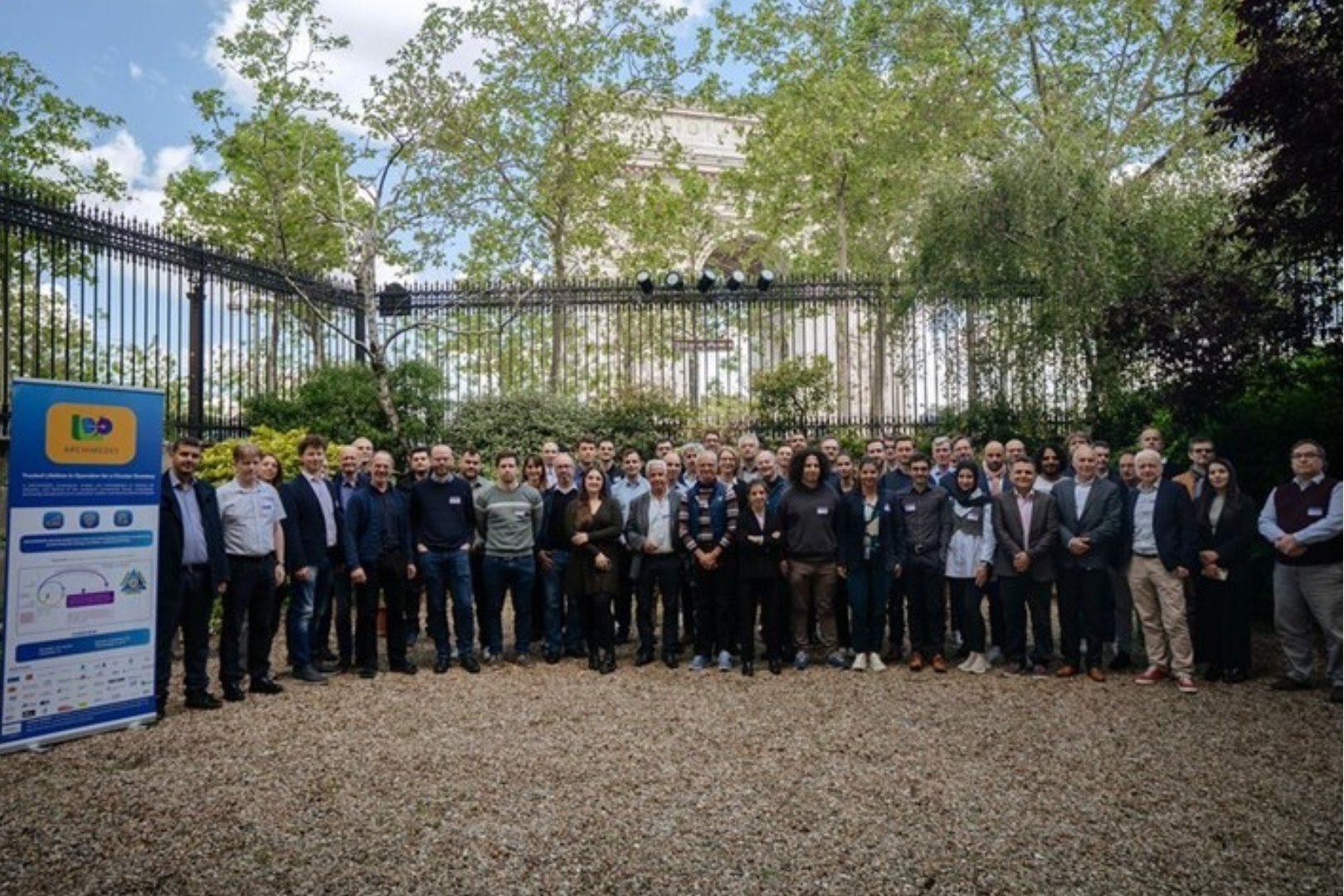
The European ARCHIMEDES project has come to an end. Over its 36-month duration, with a total budget of €40 million, it tackled a major challenge for the future: making power electronics more reliable, safer and more efficient to support the energy transition.
A key objective: Enhancing power semiconductor devices for the energy transition
As the fight against climate change requires rapid decarbonisation, Europe is focusing on the widespread electrification of transport, which accounts for approximately 30% of greenhouse gas emissions. To achieve this, electric vehicles and future clean aircraft require a new generation of electronic components: so-called wide-bandgap semiconductors, such as silicon carbide (SiC) and gallium nitride (GaN). These advanced semiconductor materials make it possible to convert energy more efficiently under extreme operating conditions.
The ARCHIMEDES project brought together 49 European partners, including automotive manufacturers, major industrial companies and research laboratories, to accelerate the market deployment of these technologies.
IRT Saint Exupéry played a leading role by coordinating Work Package 2, which was entirely dedicated to investigating failure mechanisms and the reliability of these new semiconductors. This work directly supports projects led by IRT Saint Exupéry’s High-Density Energy and Reliability competence centre, including GaNRET and SiCRET / SiCRET+.
Three major research areas to improve the reliability of future power electronics
The project organised its work around several supply chains to assess these components under real-world operating conditions.
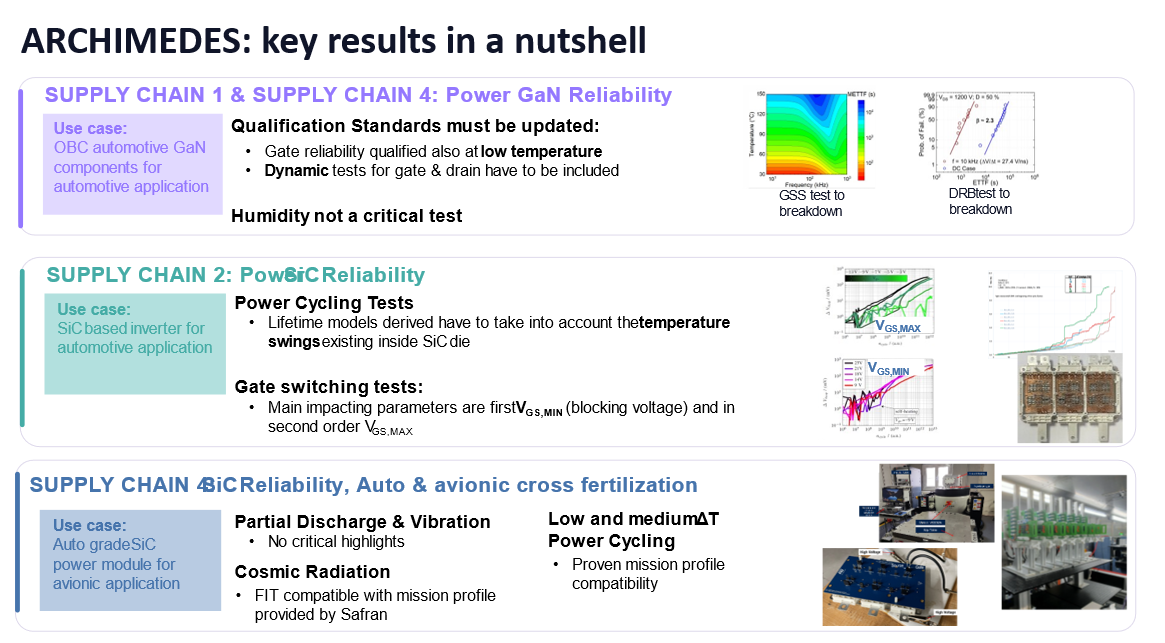
The reliability of gallium nitride (GaN) devices: Testing showed that current testing standards need to evolve. It is now essential to assess the reliability of these components at low temperatures and to incorporate more extensive dynamic testing. Conversely, the tests showed that humidity was not a major limiting factor.
The robustness of silicon carbide (SiC) for automotive applications: By testing automotive inverters, the team highlighted the importance of developing lifetime models that account for extreme temperature variations directly within the semiconductor die.
Synergies between the automotive and aerospace sectors: The project assessed the performance of SiC power modules originally qualified for automotive applications against an aerospace mission profile.
Tangible results for industry
After three years of research, the project delivered several major findings.
Reliability of GaN power devices
Evolving qualification standards: Our work demonstrates that current qualification standards need to be updated to incorporate low-temperature qualification tests and dynamic testing.
Reliability of SiC devices
Lifetime models: Power cycling tests revealed that lifetime prediction models must account for temperature swings within the SiC die. Until now, this factor had not been considered for silicon (Si) technology.
Synergies between the automotive and aerospace sectors
The use of SiC power modules qualified for automotive applications could be considered for aerospace applications. Tests conducted according to an aerospace mission profile yielded excellent results: no critical issues were identified during mechanical vibration, partial discharge, thermal cycling or cosmic radiation robustness tests.
IRT Saint Exupéry is proud to have contributed to this successful collaboration through the ARCHIMEDES project. Its findings mark an important step towards strengthening the reliability and robustness of power semiconductors in the automotive and aerospace sectors.
ARCHIMEDES is supported by the Chips Joint Undertaking and its members, including the top-up funding by National Authorities under Grant Agreement No. 101112295.