

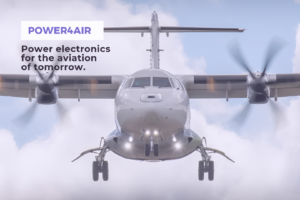
In the face of the climate and technological challenges associated with sustainable air transport, power electronics plays a key role in the development of electric and hybrid aircraft. Co-funded by the European Union and the Clean Aviation initiative, the POWER4AIR project brings together industrial and academic stakeholders to address key technological challenges in high-voltage direct[…]
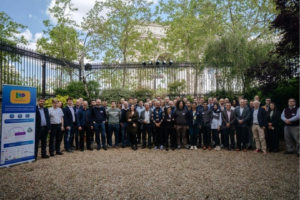
The European ARCHIMEDES project has come to an end. Over its 36-month duration, with a total budget of €40 million, it tackled a major challenge for the future: making power electronics more reliable, safer and more efficient to support the energy transition. A key objective: Enhancing power semiconductor devices for the energy transition As the[…]
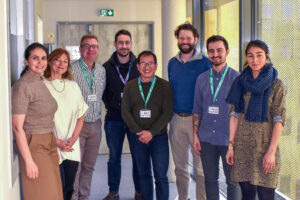
The ELIPSE 2 project has come to an end after three years of work. Building on the ELIPSE project, it aimed to advance a breakthrough technology to a higher level of maturity: the direct printing, using conductive inkjet technology, of electrical and electronic functions such as conductive traces, shielding, antennas and mounting pads for surface-mount[…]
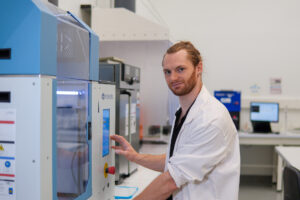
Jules Plisson has built a career where science and passion naturally echo one another. An acoustics engineer trained at ENSIM in Le Mans, he was drawn to this speciality as much by scientific curiosity as by his love of music. A percussionist and synth enthusiast, he has already performed alongside his partner, a piano teacher.[…]

The CAMISole project (Inorganic Matrix Composite for Storage in Geological Environments) marks a breakthrough in the design of storage structures for radioactive waste. In close collaboration with Andra and the LCTS, the IRT Saint Exupéry is tackling a colossal technological and environmental challenge: designing a storage tunnel liner capable of lasting over a century at[…]

The Saint Exupéry Technological Research Institute (IRT), established in Sophia Antipolis since 2017, is joining the Med’Innov University Innovation Hub (PUI)! This partnership declaration is part of the rollout of the Saint Exupéry IRT’s roadmap within the French Riviera region, aiming to strengthen its ties with the Med’Innov scientific community. Focused on the aeronautics, space,[…]

The aerospace industry is increasingly committing to the transition toward electrical systems with the goal of reducing emissions and optimizing efficiency. In this context, and in response to these requirements, Gallium Nitride (GaN) power transistors are emerging as the prime candidates to meet the demanding challenges imposed by the transportation industry. They are particularly notable[…]

The HIGHVOLT 2 project has just reached completion, marking a crucial milestone in supporting the aerospace, automotive, and rail industries toward massive electrification. Spanning 48 months, it follows in the footsteps of the FIABILITE and HIGHVOLT projects with a clear ambition: to master the physical phenomena associated with increasing voltage in embedded systems. A Central[…]

Ice accretion on exposed aircraft surfaces poses a major risk to flight safety, reduces aerodynamic performance, and increases energy consumption. Current de-icing systems, while effective, are penalizing in terms of weight, integration complexity, and energy requirements. The FREEzING 2 project, led by IRT Saint Exupéry, aims to cross a technological threshold by exploring new passive[…]

After 46 months of R&D, the ACDC project (Advanced Composites for Acoustic and vibration Damping Control) has reached its goal: developing innovative composite materials and structures to reduce noise and vibrations in aircraft nacelles and cabins. These innovations aim to enhance passenger comfort, ensure compliance with acoustic standards, and pave the way for a more[…]