

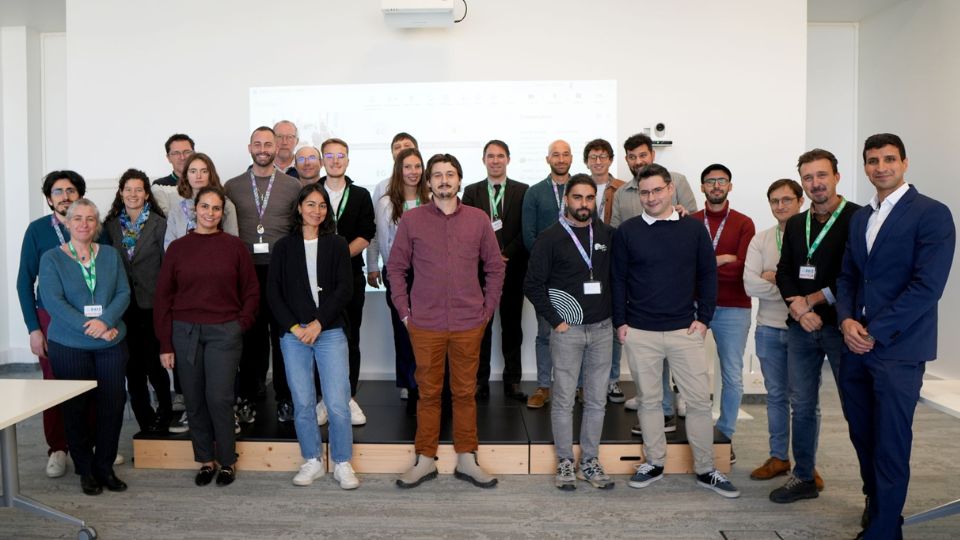
The HIGHVOLT 2 project has just reached completion, marking a crucial milestone in supporting the aerospace, automotive, and rail industries toward massive electrification. Spanning 48 months, it follows in the footsteps of the FIABILITE and HIGHVOLT projects with a clear ambition: to master the physical phenomena associated with increasing voltage in embedded systems.
A Central Objective: Breaking High-Voltage Barriers
The transition toward electric propulsion and hybridization necessitates a significant increase in network voltages. This evolution brings major technical challenges, notably the emergence of partial discharges (PD) and electric arcs, which can compromise both the safety and lifespan of equipment.
With a budget of €9 million, the project brought together a major consortium of 15 industrial and academic members: Airbus, Alstom, Axon’ Cable, Emotors, Exxelia, Erneo, IES, ITP Interpipe, Laplace, Leroy Somer, Liebherr, LSEE, Safran, SEG Dielectriques, and Radiall.
Five Strategic Research Axes
The project was structured around concrete issues for which current standards were either non-existent or inadequate:
- Management of Partial and Surface Discharges: Developing robust detection methods and numerical simulation tools to predict the Partial Discharge Inception Voltage (PDIV).
- Material Resistance: Characterizing and modeling the erosion of insulators subjected to discharges to limit system degradation.
- Functional Lifespan Prediction: Defining multi-stress aging laws (temperature, pressure, voltage, vibrations) for Electrical Insulation Systems (EIS).
- Electric Arc Detection: Developing real-time algorithms capable of identifying series arcs while minimizing false positive rates.
- Architectural Optimization: Integrating arc fault modeling directly into the network design phase to control potential consequences.
Major Technological Deliverables
The work was divided into four technical work packages (WP) that led to significant advances:
- WP 1 – Partial and Surface Discharges: Understanding phenomena under PWM (Pulse Width Modulation) waves and transferring the AIRLIFT v3 simulation tool to project members.
- WP 2 – Functional Lifespan of EIS: Conducting extensive testing campaigns (up to 12 months) on “motorettes” and industrial stators, leading to a better understanding of how space charges influence aging.
- WP 3 – Dielectric Materials / EIS: Expanding the database with 15 new materials (3D, porous PI, vitrimers) and developing low-permittivity composites to better distribute the electric field.
- WP 4 – Electric Arcs: Creating a representative aeronautical mini-distribution system and a library of circuit models to predict the impact of an arc on the network.
Results Surpassing the State-of-the-Art
The HIGHVOLT 2 project has been a technical and human success. The team designed unique in-house test benches and obtained unprecedented results regarding combined aging (temperature + high-voltage DC). Close collaboration with members and the integration of seconded personnel facilitated a unique collective increase in expertise regarding these complex phenomena.
The Next Step: HIGHVOLT 3
To maintain this momentum, the HIGHVOLT 3 project is already underway. Its objective is to deepen the understanding of degradation mechanisms on study objects of increasing complexity (from raw materials to complete equipment).
In the face of economic recovery and energy transition challenges, HIGHVOLT 3 will focus on defining new qualification methodologies and international standards—essential steps to fully leverage electrical energy in future decarbonized transport systems.